
Beta-glucans are natural compounds found in cereals, mushrooms, and yeasts, known for their role in immune and metabolic health. In this article, you will discover what they are, how they work, which foods contain them, what doses are considered effective, and what contraindications should be taken into account.
What are beta-glucans and how do they act on the immune system
Beta-glucans are polysaccharides made up of chains of glucose molecules. Their structure varies depending on the source: those from cereals such as oats and barley contain β-1,3/1,4 linkages, while those from yeasts and mushrooms like Saccharomyces cerevisiae or shiitake contain β-1,3/1,6 linkages.
These structural differences determine their biological function. In the body, beta-glucans are recognized by specific receptors on innate immune cells, such as macrophages, neutrophils, and natural killer (NK) cells. This recognition stimulates the immune defense activity, helping the body to respond more effectively to external microorganisms.
Benefits of beta-glucans supported by science
Numerous scientific studies confirm that beta-glucans help maintain immune balance and support healthy metabolic parameters. They do not act as medicines but as natural modulators of physiological processes.
Immune support
Yeast beta-glucans stimulate the activity of macrophages and NK cells, which are responsible for detecting and neutralizing pathogens. This action may help the body respond more efficiently to external challenges.
Cholesterol control
Oat beta-glucan forms a viscous substance in the intestine that reduces the absorption of cholesterol and bile acids. The European Food Safety Authority (EFSA) recognizes that the daily intake of at least 3 grams of oat or barley beta-glucan, within a balanced diet, contributes to the maintenance of normal blood cholesterol levels.
Blood sugar regulation
The same gel-forming ability that slows down fat absorption also moderates the entry of glucose into the bloodstream. This effect helps maintain stable blood sugar levels after meals.
Antioxidant effect
Some studies attribute to beta-glucans a role in neutralizing free radicals, thereby helping to protect cells from oxidative damage.
Foods rich in beta-glucans
Beta-glucans are found in many everyday foods, especially those of plant and fungal origin. Regular consumption supports a diet rich in soluble fiber and bioactive compounds.
Notable natural sources include:
- Whole grains: oats and barley
- Edible mushrooms: reishi, shiitake, maitake
- Baker’s yeast (Saccharomyces cerevisiae)
- Seaweeds: such as kombu and nori
Including these foods in your diet can provide different types of beta-glucans and complement their physiological benefits.
Yeast beta-glucan: the most effective for immune defense
Yeast-derived beta-glucan, characterized by β-1,3/1,6 linkages, is the most active in stimulating the immune system. Numerous studies have shown that it helps keep immune cells “alert,” reducing the frequency of mild respiratory discomfort in different population groups. Its use as part of a healthy lifestyle can be considered a natural preventive approach.
How to take beta-glucans safely
Beta-glucans can be obtained through food or, when intake is insufficient, through dietary supplements. The recommended dose depends on the source:
- In the diet: about 3 grams per day from oats or barley.
- In supplements: between 100 and 500 mg per day of yeast beta-glucans (β-1,3/1,6).
It is advisable to take them with meals to improve tolerance and absorption. In cases of pregnancy, breastfeeding, or ongoing medication, it is best to consult a healthcare professional before use.
Contraindications and side effects of beta-glucans
Beta-glucans are considered safe for most people. However, there are some cases in which their consumption should be avoided or adjusted.
When to avoid their use
- People allergic to mushrooms or oats.
- Patients undergoing treatment with immunosuppressants.
- Individuals with intestinal obstruction or severe digestive problems.
Possible side effects
Some people may experience mild digestive discomfort such as gas, bloating, or a feeling of fullness. They may also interfere with the absorption or metabolism of certain drugs, such as antidiabetics or thyroid medications, so it is advisable to space out their intake.
Beta-glucans in dietary supplements: natural support for defenses
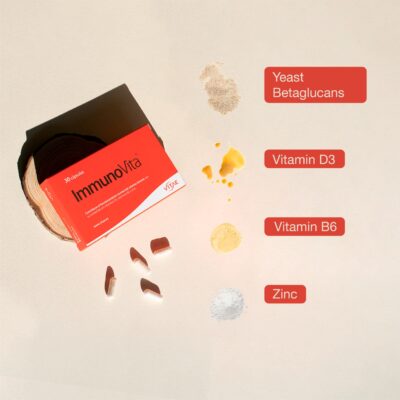
In dietary supplements, beta-glucans are often combined with vitamins and minerals that also contribute to immune function, such as vitamin D3, vitamin C, and zinc. This synergy can help optimize the body’s natural immune response without resorting to pharmacological doses.
Scientific evidence on beta-glucans
Recent studies strengthen their relevance in preventive nutrition:
- Nutrients (2020): 28% increase in macrophage activity in healthy adults after beta-glucan supplementation.
- Clinical Immunology (2019): 30% reduction in the frequency of mild respiratory infections in children.
- European Journal of Clinical Nutrition (2017): 10% reduction in LDL cholesterol after regular consumption of oat beta-glucan.
These findings support the role of beta-glucans as modulators of immunity and lipid metabolism within a healthy lifestyle.
FAQS
- Who should not take beta-glucans?
People with allergies to mushrooms, yeasts, or oats should avoid them. Those under immunosuppressive treatment should also refrain from taking them, as beta-glucans act on immune response. In cases of severe digestive disorders (such as intestinal obstruction), consumption is not recommended without professional assessment.
- Do beta-glucans help lower cholesterol?
Oat beta-glucan contributes to maintaining normal blood cholesterol levels when consuming at least 3 grams per day as part of a balanced diet and healthy lifestyle. This effect is recognized by European regulatory authorities for oat and barley beta-glucans. It should not be interpreted as a medical treatment.
- Can children take beta-glucans?
Some research in children has shown fewer episodes of mild respiratory discomfort with yeast beta-glucan supplementation. However, in minors, decisions should always be made by a qualified healthcare professional. This content is aimed at adult populations.
- Which type of beta-glucan is best for immunity?
Yeast beta-glucan, with β-1,3/1,6 linkages, is the most studied in relation to innate immune response. It is considered particularly active in “activating” macrophages and NK cells. Oat beta-glucan, on the other hand, is more closely linked to cholesterol regulation.
- What side effects can they cause?
The most frequently reported side effects are mild and digestive in nature: gas, bloating, or a feeling of heaviness. Beta-glucans may also interact with some medications, particularly antidiabetic and thyroid drugs, so it is advisable to space out doses or consult beforehand.
Conclusion: a natural ally backed by science
Beta-glucans are a clear example of how nutrition can strengthen the body’s natural defense mechanisms. Including beta-glucan-rich foods or choosing quality supplements—always with professional guidance—can be an effective strategy to support immune and metabolic health throughout the year.